"A soothing tongue is a tree of life, but a perverse tongue crushes the spirit."
(Proverbs 15:4)
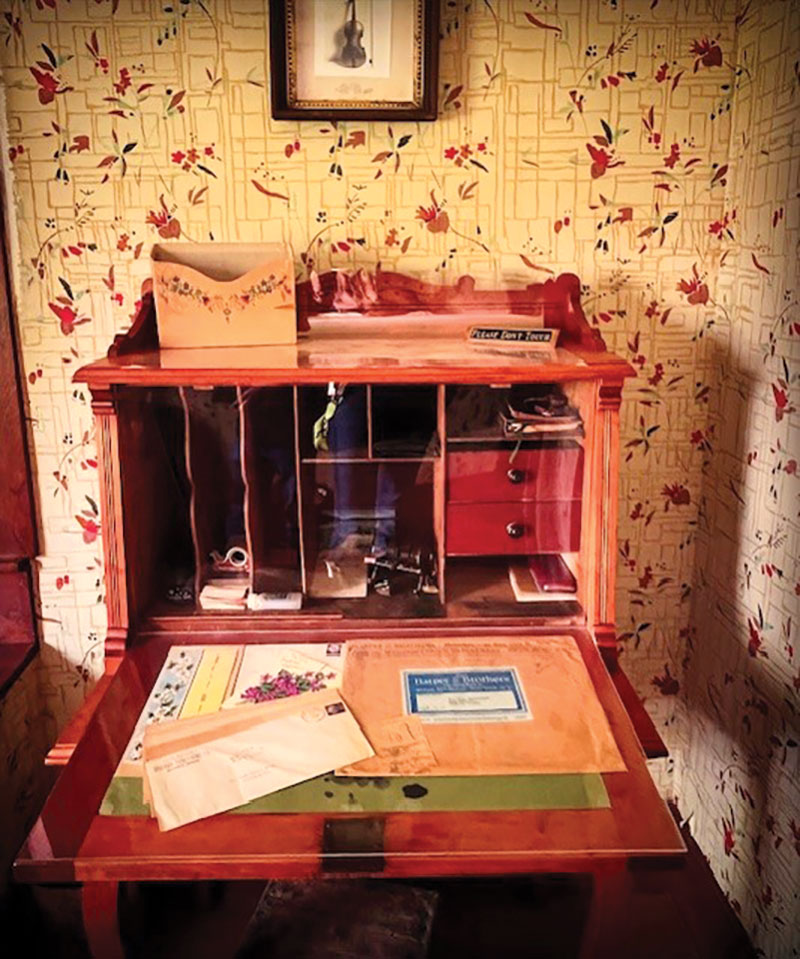
Mansfield, Missouri
Image courtesy/Ozark Farm & Neighbor Newspaper
"Sometimes we are a great trial to our friends and put an entirely
uncalled-for strain upon our friendships by asking foolish questions.
The Man of the Place and I discovered the other day that we had
for some time been saying to our friends:
"Why don't you come over?"
Can you think of a more awkward question than that? Just imagine the result
if that question should always be answered truthfully. Some would reply,
"Because I do not care to visit you." Others might say, "Because it is too
much trouble" while still others, who might care to come, would be swamped
in trying to enumerate the many reasons why they had not done so.
We decided that we would break ourselves of such a bad habit.
I once had a neighbor who, whenever we met, invariably asked me why
I had not been to visit her. Even when I did go she met me with the query,
"Why haven't you been over before?" It was not a very pleasant greeting,
and naturally one shuns unpleasantness when one may.
I have another neighbor who will call me on the phone and say: "It's
been a long time since we have seen you and we do want a good visit.
Can't you come over tomorrow?" And immediately I wish I could go.
It does make such a difference how things are said.
Friendship is like love. It cannot be demanded or driven or insisted upon.
It must be wooed to be won. The habit of saying disagreeable things or
being careless about how what we say affects others grows on us
so easily and so surely if we indulge it.
"Mrs. Brown gave me an unhappy half hour a few days ago," said Mrs. Gray to me.
"She said a great many unpleasant things and was generally disagreeable, but
it is all right. The poor thing is getting childish, and we must overlook her oddities."
Mrs. Gray is a comparative newcomer in the neighborhood, but I have known
Mrs. Brown for years; and ever since I have known her, she has prided herself
on her plain speaking, showing very little regard for others' feelings.
Her unkindness appears to me not a reversion to the mentality of childhood
but simply an advance in the way she was going years ago. Her tongue has
only become sharper with use, and her dexterity in hurting the feelings
of others has grown with practice.
I know of another woman of the same age whom no one speaks of as
being childish. It is not necessary to make such an excuse for her because
she is still, as she has been for twenty years, helpful and sweet and kind.
And this helpfulness and sweetness and kindness of hers has grown with
the passing years. I think no one will ever say of her, "poor old thing,
she is childish" as an excuse for her being disagreeable. I know
she would hope to die before that time should come.
People do grow childish in extreme old age, of course, and should be
treated with tenderness because if it; but I believe that even then the
character which they have built during the years before will manifest
itself. There is a great difference in children, you know, and I have
come to the conclusion that if we live to reach a second childhood,
we shall not be bad-tempered, disagreeable children
unless we have indulged those traits.
Then there are people who are "peculiar". Ever meet any of them?
The word seems to be less used than formerly, but I think there was a time
when it was very common, and I longed to shriek every time I heard it.
"Oh! You must not do that; George will be angry. He's so peculiar!"
"Of course she doesn't belong with the rest of the crowd, but I had
to invite her. She is so peculiar, you know, and so easily offended."
"I wouldn't pay any attention to that. Of course, she did treat
you abominably, but it is just her way. She is so peculiar."
And so on and so on. I thought seriously of cultivating a reputation
for being peculiar, for like charity, such a reputation seemed to cover
multitudes of sins; but I decided that it would be even more unpleasant
for me than for the other fellow; that it would not pay to make myself an
unlovely character for the sake of any little, mean advantages to be gained by it."
"Keeping Friends"
(March 1919)
An essay from the chapter,
"How Much Are Your Words Worth?"
From the book,
"Writings To Young Women From
Laura Ingalls Wilder On Wisdom & Virtue"
By Laura Ingalls Wilder
Edited by Stephen W. Hines
Copyright 2006
Tommy Nelson Publishers
A Division of Thomas Nelson Inc.
Nashville, TN


No comments:
Post a Comment